The Peace Arch
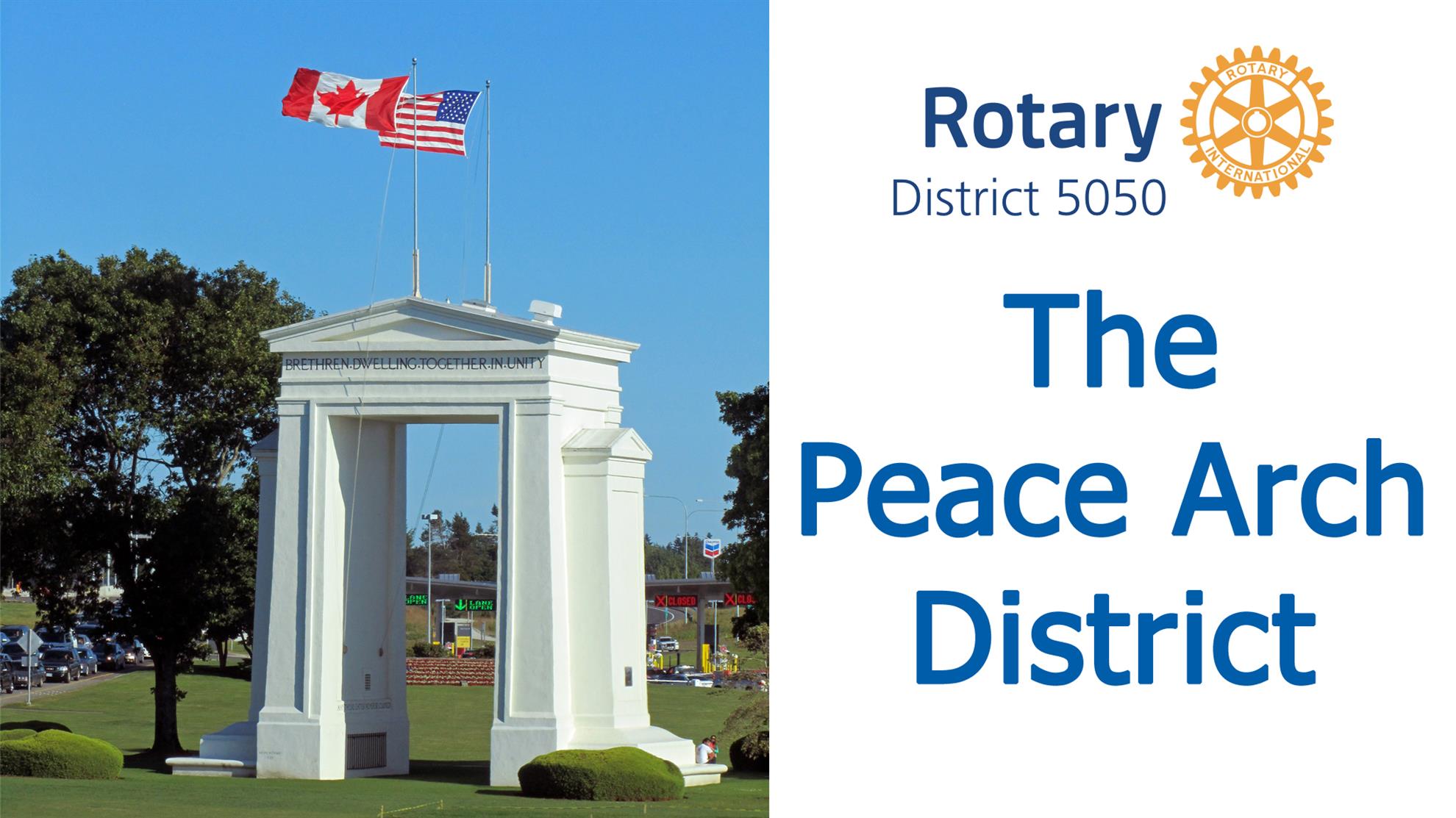
The Peace Arch stands on the international boundary between Blaine, Washington, and Surrey, British Columbia with one foot anchored in American soil and the other in Canadian.
The Peace Arch represents the longest undefended boundary in the world and is the first monument built and dedicated and to world peace.
The Peace Arch was constructed to commemorate the end of the war of 1812.
In 1914 (the 100th Anniversary of the signing of the treaty which ended the war), the international fund-raising efforts for the Peace Arch were spearheaded by Samuel Hill, famed Washington State lawyer, financier, road builder and humanitarian,who later dedicated it on September 6, 1921.
The Arch's design was donated by H.W. Corbett of London, England, an internationally known architect. Automobile clubs in Washington State and British Columbia contributed time and money. Construction began under an international force of volunteers in 1920.
Standing 67 feet high, the Peace Arch is made of concrete and reinforced steel. Its foundation consists of 76 fourteen inch pilings driven 25-30 feet into the earth. The Arch was said to be one of the first structures in North America constructed to be earthquake proof.
The 3500 sacks of concrete for the Arch's foot walls were donated by R.P. Butchart, of Victoria, British Columbia's Butchart Garden's fame; and 50 tons of steel were donated by E.H. Gary of New York. Originally, 470 lights were "artistically set" up and down the massive pilasters and along the interior frieze of the Arch.
The American side of the Arch is inscribed with the words "Children of a Common Mother;" the Canadian side, with the words "Brethren Dwelling together in Unity." Within the portal of the Arch on the west side are the words "1814 Open One Hundred Years 1914" and on the east side, "May These Gates Never Be Closed." The gates have never been closed.
Two bronze plaques are placed above the exterior foot walls of the Arch. One is of the Canadian steamship the Beaver; the other of the Mayflower. Wooden relics, allegedly cut from each ship, were sealed behind each plaque when the Arch was dedicated in 1921.
The shrubbery in the gardens of the original seven acre park that surround the Arch was donated by Robert Moran, the famed ship builder who built Rosario Mansion (Rosario Resort) on Orcas Island, Washington.
In 1931, the expansion of the park that surrounds the Peace Arch to 40 acres was made possible with the help of school children from Washington State and British Columbia who donated their pennies, nickels and dimes to the project.
Today, the international park's picturesque gardens are the home of over 200 perennials and 55,000 annuals that are planted each year. The park hosts ethnic and family gatherings, picnics, weddings, civic events and annual events of international significance.
Over 500,000 visitors tour this international historic site annually. The International Peace Arch is one of the few landmarks in the world listed on the National Historic Registries of two different countries.
The history of the Peace Arch reflects more than our past; its existence gives meaning to our present. As the world moves into the twenty-first century the Peace Arch is a beacon of hope for our future.

This article is from the United States Canada Peace Arch Anniversary Association:
https://www.peacearchpark.org/History_2.html
https://www.peacearchpark.org/History_2.html